
ENOSH POESSL Analyzer
Professional HVAC acoustic analysis software for predicting sound levels, evaluating NC ratings, and generating structured engineering reports for building acoustic design.
Software Overview
The ENOSH POESSL Analyzer is a specialized engineering software developed for acoustic consultants and mechanical engineers to predict and assess HVAC-generated noise levels in occupied spaces.
The software supports the complete acoustic workflow, from project setup and equipment definition to room-path modeling, sound power analysis, and final report generation. It is designed to simplify complex HVAC noise studies while maintaining engineering depth, accuracy, and clear documentation.
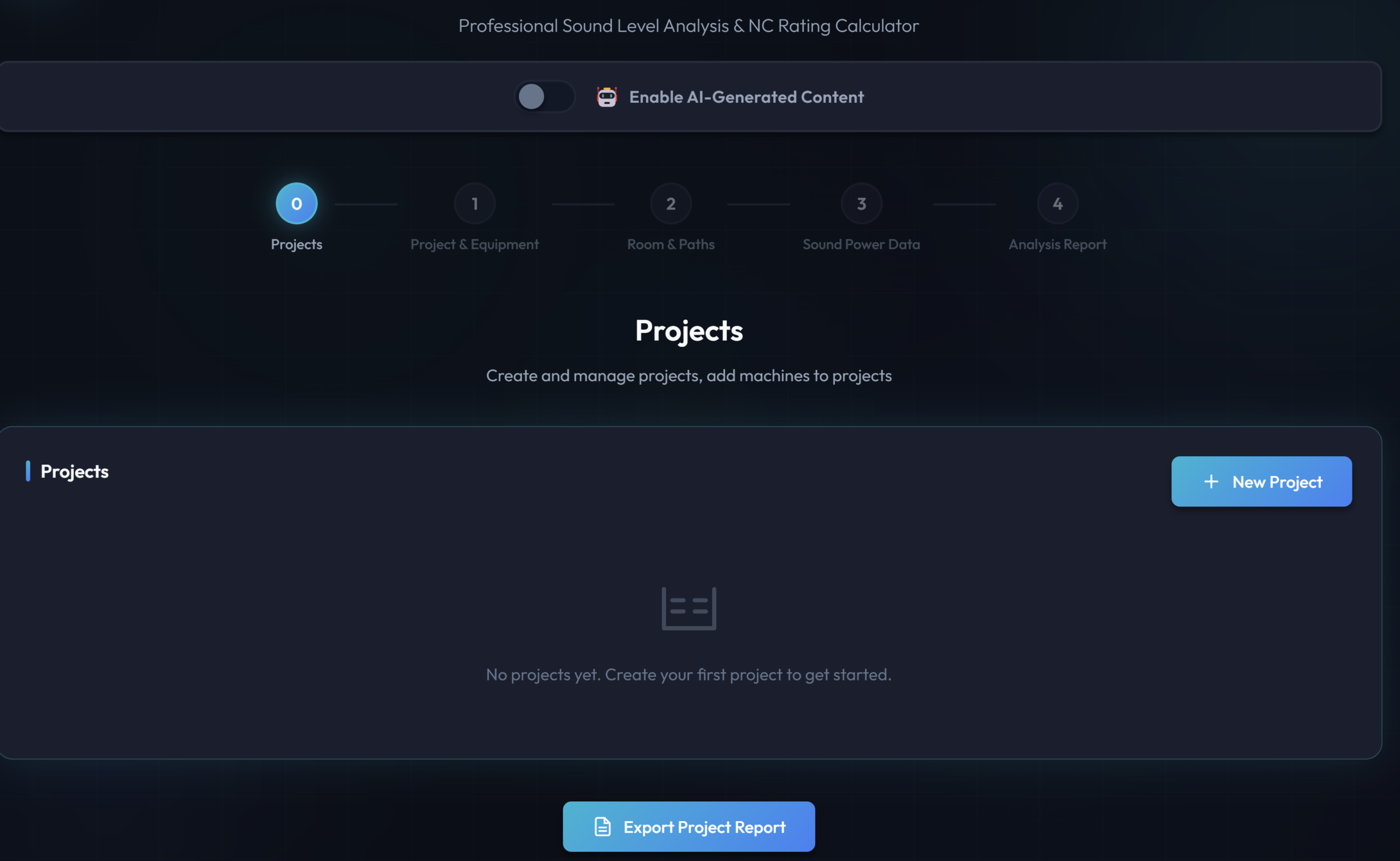
Analysis Process
Projects
Create and manage analysis projects, organize case studies, and prepare project-specific acoustic evaluations.
Project & Equipment
Define HVAC equipment such as AHUs, FCUs, fans, and related mechanical systems contributing to sound generation.
Room & Paths
Configure room geometry, receiver location, and transmission paths including discharge, return, and radiated sound routes.
Sound Power Data
Input octave-band sound power levels and acoustic parameters for detailed noise propagation analysis.
Acoustic Evaluation
Calculate predicted sound pressure levels, A-weighted results, and Noise Criteria ratings at receiver positions.
Analysis Report
Generate structured engineering reports ready for documentation, review, and client submission.
Acoustic Analysis Functions
Noise Prediction
The analyzer predicts octave-band sound pressure levels and A-weighted sound levels at receiver locations based on HVAC source data, room conditions, and sound path attenuation.
Attenuation Modeling
Detailed attenuation elements can be considered throughout the transmission path, including lined duct, silencers, elbows, flexible duct, end reflection, ceiling effects, and branch division.
NC Rating Evaluation
Predicted sound levels are compared against target Noise Criteria values to identify whether acoustic treatment is required in the proposed design.
Design Decision Support
The software highlights where mitigation measures may be necessary, helping engineers optimize HVAC acoustic performance before project execution.
What the Software Provides
Project-Based Workflow
Organized multi-step analysis flow from input definition to final engineering output.
HVAC Equipment Analysis
Supports the assessment of AHUs, FCUs, fans, and other building mechanical equipment.
Octave-Band Calculations
Performs detailed sound level calculations across frequency bands for accurate evaluation.
A-Weighted Results
Provides overall dBA values for practical acoustic assessment and reporting.
NC Criteria Comparison
Compares predicted results against design targets to assess compliance and comfort.
Word Report Export
Creates professional multi-section reports ready for client delivery and documentation.
Automated Engineering Reporting
ENOSH POESSL Analyzer produces a professional technical report that documents the full acoustic analysis workflow. The generated report can include standards references, input data tables, calculation results, sensitivity analysis, recommendations, and appendices.
Engineers can also attach drawings and datasheets so the final Word document is prepared for submission to clients, project managers, and design stakeholders.
Applications
Hospitals
Supports acoustic evaluation in sensitive indoor environments where low background noise is essential.
Commercial Buildings
Useful for offices, mixed-use developments, and other occupied spaces requiring HVAC acoustic control.
Educational Facilities
Helps engineers maintain comfortable indoor acoustic conditions in schools, universities, and training spaces.
Technology Focus
System Preview